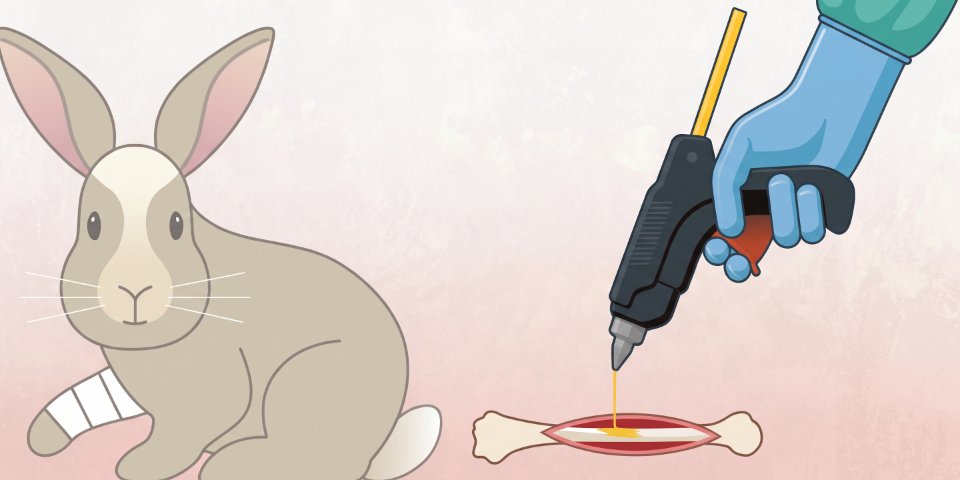
A repurposed glue gun has helped repair broken bones in rabbits. Instead of a regular glue stick, the glue gun melts a material that helps bones heal.
Some breaks in bones need a little help to mend. So surgeons sometimes take a bit of bone from elsewhere in the body to make a patch called a graft. Or they can use a synthetic — human-made — material that mimics bone.
Synthetic grafts are often
But the glue gun method doesn’t require images of the fracture. And it doesn’t need any special graft design. The handheld device can simply squirt the graft material right onto a break.
The idea was to design a printing system that could be easily used in opera
The printing device holds sticks of a specially made “bioink.” It’s safe to use in the body. It consists of two compounds commonly used for 3-D printing implants. One, hydroxyapatite, is a mineral found in bones. The other is a body-safe plastic called polycaprolactone, or PCL.
The
Crafting Grafts
Like the glue sticks used for crafting, the bioink fits in the handheld printer. It can be squeezed out where it’s needed. But regular hot glue guns work at temperatures far too high for living tissues.
So the researchers modi
Lee’s team tested the printer and bioink on broken leg bones in rabbits. Another set of rabbits got a material called bone cement used to attach implants to bones. The rabbits that got the bioink had better healing and regrowth of bone tissue. And the animals showed no signs of infection during the 12 weeks after surgery. The team shared its result
For now, the printer is still a proof-of-concept for people. Lee aims to develop it into a multi-use printing system. For instance, it might apply chemicals that promote healing during surgeries. But first, researchers will have to do
There may be other limitations. “The high temperature of the extruded material is likely to stress or kill the cells,” says Debora
In the future, this sort of device could help surgeons with more complex repairs, suggests Nieves Cubo-Mateo. She’s a biomaterials engineer at Nebrija University in Madrid, Spain. She wasn’t part of the study.
But there is a long way to go for that to happen, she says. The printer would need to work with other tools that surgeons use. Those include imaging technologies and robotic devices used during surgeries. That would take the new device beyond just a “defect-filler,” she says. Someday, it could be a “bone printer pen” useful for many types of surgeries.
— Payal Dhar
توضیح و گرامر کاربری:
۱. ساختار «Be likely to + Verb» برای بیان احتمال قوی
جمله متن:
“The high temperature of the extruded material is likely to stress or kill the cells...”
- الگو:
Subject + be + likely + to + base verb - کاربرد: این ساختار زمانی به کار میرود که وقوع کاری بر اساس شواهد و منطق، احتمال بالایی دارد (معادل فارسی: «احتمالاً فلان اتفاق میافتد» یا «احتمال دارد که...»).
- تفاوت با شاید (maybe / might): عبارت likely درجه اطمینان و احتمال علمی یا آماری بالاتری را نسبت به might نشان میدهد.
- مثال کاربردی:
- This new technique is likely to reduce recovery time.(این روش جدید احتمالاً زمان بهبودی را کاهش میدهد.)
۲. ساختار «Help + Object + (to) Verb» (کاربرد مصدر بدون to)
جمله متن:
“That could help the bioink cool more quickly after extrusion.”(و در بخش دیگر: “This sort of device could help surgeons with more complex repairs...”)
- الگو:
Help + Object + Base VerbیاHelp + Object + to-infinitive - قاعده: بعد از مفعولِ فعل help، میتوانید فعل بعدی را هم با to و هم بدون to (Bare Infinitive) بیاورید؛ هر دو حالت کاملاً درست هستند، اما در انگلیسی مدرن و آمریکایی، حالت بدون to رایجتر و طبیعیتر است:
- help the bioink cool (بدون to - مانند متن) = help the bioink to cool (با to)
| واژه | فونتیک (American) | نقش دستوری | تعریف ساده انگلیسی | ترجمه فارسی |
| repurpose | /ˌriːˈpɝː.pəs/ | verb | to use something for a new or different purpose | تغییر کاربری دادن، استفاده در نقشی جدید |
| graft | /ɡræft/ | noun | a piece of healthy skin, bone, or tissue put onto a damaged area | پیوند (استخوان یا بافت) |
| synthetic | /sɪnˈθet̬.ɪk/ | adjective | made by humans; not natural | مصنوعی، ساختگی (انسانساز) |
| mimic | /ˈmɪm.ɪk/ | verb | to copy or act like something else | تقلید کردن، شبیهسازی کردن |
| fracture | /ˈfræk.tʃɚ/ | noun | a break or crack, especially in a bone | شکستگی، ترکخوردگی |
| squirt | /skwɝːt/ | verb | to force liquid or soft material out in a stream | با فشار بیرون پاشیدن/ریختن |
| implant | /ˈɪm.plænt/ | noun | a medical device or tissue placed inside the body | ایمپلنت، بافت/قطعه پیوندی داخل بدن |
| bioink | /ˈbaɪ.oʊ.ɪŋk/ | noun | a printable liquid material that contains cells or body-safe substances | جوهر زیستی (مواد قابل چاپ برای بافتهای زنده) |
| degrade | /dɪˈɡreɪd/ | verb | to break down and disappear over time naturally | تجزیه شدن، تحلیل رفتن |
| stiffness | /ˈstɪf.nəs/ | noun | how firm, hard, or difficult to bend something is | سفتی، سختی، انعطافناپذیری |
| tailor | /ˈteɪ.lɚ/ | verb | to change or adapt something for a special need | متناسبسازی کردن، طبق نیاز تنظیم کردن |
| tissue | /ˈtɪʃ.uː/ | noun | a group of cells that form the body of an animal or plant | بافت (زیستی) |
| proof-of-concept | /ˌpruːf əv ˈkɑːn.sept/ | noun / adjective | a test or model that shows an idea can actually work | اثبات مفهوم (آزمایش اولیه برای نشان دادن عملی بودن طرح) |
| disinfect | /ˌdɪs.ɪnˈfekt/ | verb | to clean something with chemicals to kill germs and bacteria | ضدعفونی کردن |
| extrude | /ɪkˈstruːd/ | verb | to push or squeeze a soft material out through a small opening | بیرون راندن، با فشار از نازل خارج کردن |