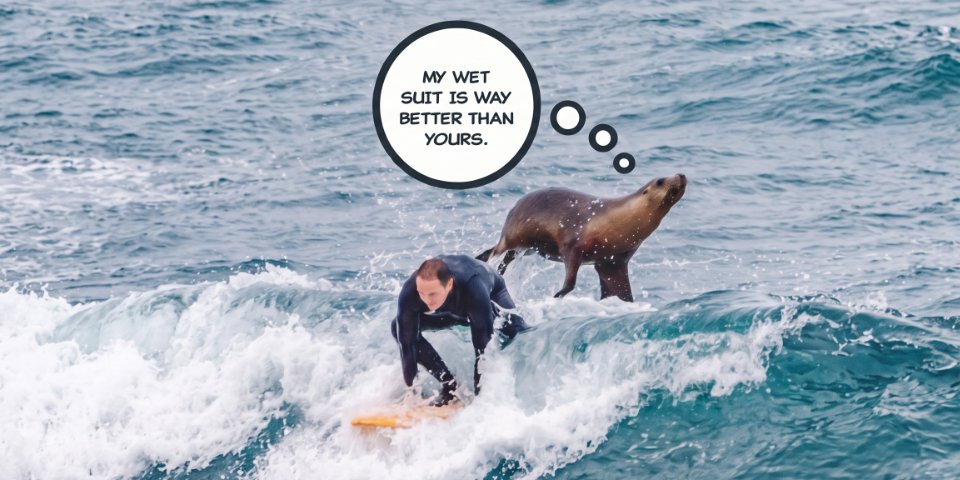
When photographer Nick Thake headed to the beach in Perth, Australia, one winter morning, he hoped he’d snap a photo of a surfer in the barrel of a wave. But he captured something way better: a “surfing” sea lion!
The surfers had seen the sea lion earlier that day, but they hadn’t noticed that the marine mammal was leaping right behind them until Thake shared his pictures. “Turns out this sea lion likes to hang out at this beach, and it often puts on a show for the locals,” he says.
Sea lions sometimes leap out of the water to avoid predators like sharks. But since no sharks were spotted in the area that day, the sea lion was probably just being playful, says Sharon Melin, a researcher and sea lion expert with the National Oceanic and Atmospheric Administration. “They’re very curious about anything new in their environment,” she says. “I think the animal saw the movement of the surfers and decided to join in.”
No surfboard needed!
— Alli Dickey
| واژه | فونتیک (American) | نقش دستوری | تعریف ساده انگلیسی | ترجمه فارسی |
| snap a photo | /snæp ə ˈfoʊ.t̬oʊ/ | idiom | to take a photograph quickly | عکس فوری / یهویی گرفتن |
| barrel of a wave | /ˈber.əl əv ə weɪv/ | noun phrase | the tube or hollow space formed by a curling wave | لوله یا قوس توخالی موج |
| marine mammal | /məˈriːn ˈmæm.əl/ | noun phrase | a warm-blooded sea animal (like seals or whales) | پستاندار دریایی |
| leap | /liːp/ | verb | to jump high or a long distance | جهیدن، پرش بلند کردن |
| turns out | /tɝːnz aʊt/ | phrasal verb | used to say that something is known to be true in the end | کاشف به عمل آمدن، معلوم شدن |
| hang out | /ˈhæŋ aʊt/ | phrasal verb | to spend time relaxing in a place | وقت گذراندن، پلاس بودن |
| put on a show | /pʊt ɑːn ə ʃoʊ/ | idiom | to perform or do something entertaining | نمایش به راه انداختن، خودنمایی کردن |
| predator | /ˈpred.ə.t̬ɚ/ | noun | an animal that hunts and eats other animals | شکارچی، حیوان درنده |
| spot | /spɑːt/ | verb | to see, notice, or detect someone/something | مشاهده کردن، به چشم دیدن |
توضیح و کابرد گرامری:
۱. گذشته کامل (Past Perfect) برای تقدم زمانی
“The surfers had seen the sea lion earlier that day, but they hadn’t noticed that the marine mammal was leaping...”
نکته: زمان گذشته کامل با فرمول had + شکل سوم فعل (p.p) ساخته میشود و برای نشان دادن کاری استفاده میشود که قبل از یک عمل دیگر در گذشته اتفاق افتاده است. در این جمله، دیدن و متوجه نشدن موجسواران قبل از عکس گرفتن عکاس یا به اشتراک گذاشتن عکسها رخ داده است.
۲. ساختار مصدر با to برای بیان هدف (Infinitive of Purpose)
“Sea lions sometimes leap out of the water to avoid predators...”
نکته: برای بیان هدف، قصد یا دلیل انجام یک کار، از ساختار to + شکل ساده فعل استفاده میشود که معادل «به منظورِ» یا «برایِ» در فارسی است (شیرهای دریایی بیرون میپرند تا از دست شکارچیان فرار کنند). نیازی به استفاده از عباراتی مثل for avoiding نیست.