Sound travels very well through water—much better, in fact, than it does through air. So it shouldn’t be surprising that many ocean animals make noise. They use sound to communicate, to navigate, and even to hunt. As Brandon Southall, a biologist who studies marine mammals and ocean noise, says, “Their whole
To a fish, the sea probably sounds more
Noisy New Neighbors
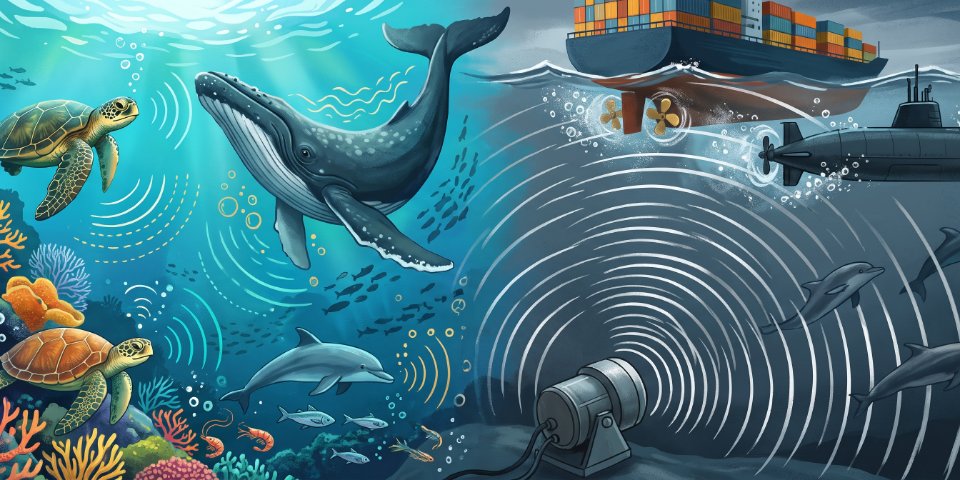
Yes, the ocean can be a noisy place. But these days the fish aren’t the only ones sounding off. They have more and more competition from human machines.
Every day, thousands of huge container ships chug across the world’s oceans, carrying everything from grain to sneakers. On top of th
Whales and dolphins bounce sound waves off objects to locate them in the water. This handy trick is called sonar. They catch the echoes with special sound sensors in their foreheads. From the shape of the echo, they can tell the size, distance, speed, an
Ships and submarines also use sonar. But unlike dolphin sonar, human sonar is very loud! That’s because a ship’s “ears” aren’t as sensitive as a dolphin’s. Animals swimming nearby can be deafened, knocked unconscious, or even killed by a loud submarine sonar burs
Underwater construction can also be dangerously loud. Big pounders called pile drivers are used to attach structures to the seabed. Each blow sends a powerful boom through the water. When new pilings were driven during repairs to the San Francisco–Oakla
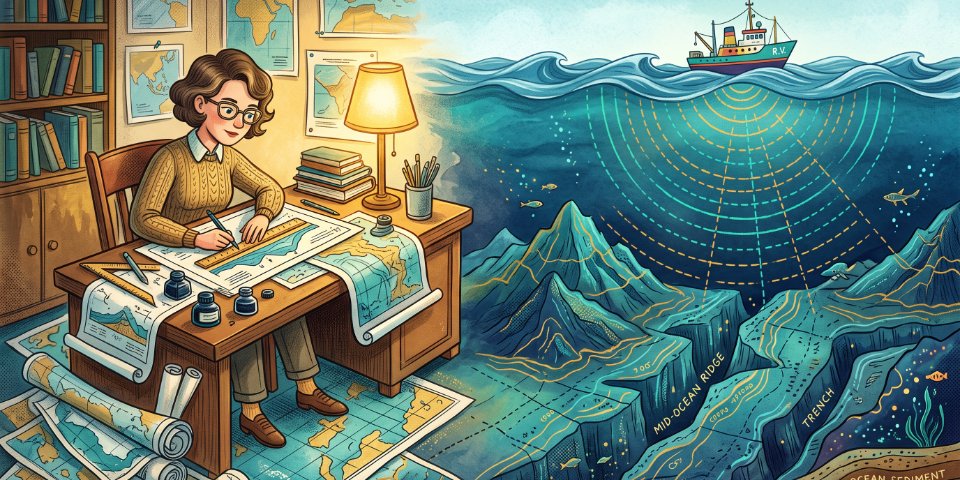
Geologists pound on the seafloor too, listening to the echoes to detect oil wells and map Earth’s layers. The results are useful to science, but all that hammering probab
Turning Down the Volume
As people realize how important sound is to ocean animals, they are looking for ways to reduce human noise. Ships could get quieter just by slowing down—slower propellers make less noise. Engineers are also trying to find quieter propeller shapes.
To reduce construction noise, some companies are using a
Fixing sonar noise is trickier since the sound pulses have to be loud to be useful. But the navy now posts lookouts and avoids loud sonar when whales and dolphins are near. We still have a lot to learn about sound in the oceans, but together we can help keep the sea a quieter place.
Shhhhhh! Fish talking.
| واژه / عبارت | فونتیک آمریکایی (GA) | معنی انگلیسی ساده | معنی فارسی |
| acoustic | /əˈkuː.stɪk/ | related to sound or hearing | صوتی، وابسته به صدا و شنوایی |
| navigate | /ˈnæv.ə.ɡeɪt/ | to find the right direction or path | مسیریابی کردن، جهتیابی کردن |
| snapping shrimp | /ˈsnæp.ɪŋ ʃrɪmp/ | a type of shrimp that makes loud popping sounds | میگوی هفتتیرکش (میگوی صدادار) |
| crackle | /ˈkræk.əl/ | to make short, sharp popping sounds | ترقتوروق کردن، صدای ریز و خشک دادن |
| lovelorn | /ˈlʌv.lɔːrn/ | sad because of love | عاشق دلشکسته، ناکام در عشق |
| grunt | /ɡrʌnt/ | a short, low, rough sound | صدای ناله یا خرناس کوتاه و بم |
| rustle | /ˈrʌs.əl/ | a soft, dry sound like moving paper or dry leaves | خشخش کردن |
| competition | /ˌkɑːm.pəˈtɪʃ.ən/ | a situation where others try to get the same thing | رقابت |
| propeller | /prəˈpel.ɚ/ | curved blades that turn fast to push a ship or plane | پروانه کشتی یا هواپیما |
| churn up | /tʃɝːn ʌp/ | to mix or stir water or dirt violently | شدیداً به هم زدن، متلاطم کردن |
| sonar | /ˈsoʊ.nɑːr/ | a system that uses sound waves to find objects underwater | ردیاب صوتی (سونار) |
| echo | /ˈek.oʊ/ | a sound that bounces back off a surface | پژواک، بازتاب صدا |
| prey | /preɪ/ | an animal that is hunted and eaten by another | شکار، طعمه |
| knock unconscious | /nɑːk ʌnˈkɑːn.ʃəs/ | to make someone or something lose awareness or faint | بیهوش کردن |
| burst | /bɝːst/ | a sudden, short explosion or release of energy/sound | فوران ناگهانی، انفجار یا شلیک لحظهای |
| pile driver | /ˈpaɪl ˌdraɪ.vɚ/ | a heavy machine used to pound posts deep into the ground | شمعکوب (دستگاه کوبیدن پایهها به کف زمین یا دریا) |
| swim bladder | /ˈswɪm ˌblæd.ɚ/ | an air sac that helps a fish float and hear | کیسه شنا (کیسه هوای درون بدن ماهی) |
| geologist | /dʒiˈɑː.lə.dʒɪst/ | a scientist who studies rocks and the structure of Earth | زمینشناس |
| bubble curtain | /ˈbʌb.əl ˌkɝː.tən/ | a wall of rising bubbles used to block sound waves | پرده حباب |
| trickier | /ˈtrɪk.i.ɚ/ | more difficult to deal with | دشوارتر، قلقدارتر |