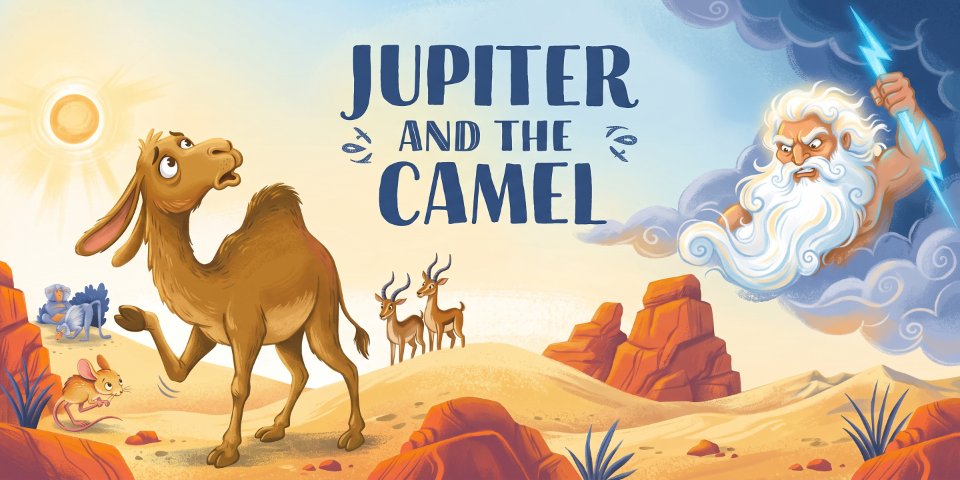
The sun beat down on the desert. All the animals looked for shady places to hide from the heat. Well, all the animals except the camel. His thick fur protected him from the sun. He also had long ears that let him hear everything the other animals said!
A jerboa leaped across the sand on her little feet. “Ow-ow-ow!” said the mouselike creature, squeaking each time her paws touched the ground. She dived into a crevice under a rock and peeked out at the camel. “I wish I had thick pads on my feet like that camel does. Then, I could walk across hot sand without feeling a thing!” she said enviously.
The camel pretended not to hear the jerboa. Then, the camel wandered past an oasis. A troupe of baboons had come there to drink, but the pool was nearly dry. Only a muddy puddle remained. “I wish I was like that camel! He hardly needs to drink anything because he stores moisture in his hump!” said a baby baboon clinging to his mother’s back.
The camel’s long ears caught every word. He was proud of his hump and looked down on other animals who had to drink every day.
When evening fell and the desert got cooler, a family of antelopes trotted past the camel. He greeted them politely, and the animals nodded their horned heads in return. But then, a sinister spotted shape slinked out from behind a rock. It was a leopard, and he prepared to pounce on the antelopes.
The tallest antelope stepped forward and lowered his long, curved horns. “Leave us alone, or else!” the animal said in a loud, clear voice. The leopard gulped nervously. “I’ll settle for some easier prey… like that camel over there!”
The leopard leaped towards the camel, who turned around and ran away in a panic. His plate-sized feet kicked up clouds of sand as he clumsily galloped away from the predator. The camel kept running until the big cat gave up and stopped chasing him.
The humped animal breathed in and out heavily. He was exhausted! “What’s the use of having a magnificent hump, long ears and thick-soled feet for walking on sand if I don’t have anything to defend myself with?” the camel grumbled. “I’m going to complain to Jupiter, the king of the gods!”
The camel began trudging towards a high mountain that loomed in the distance. When the camel reached its rocky slopes, he began climbing. After huffing and puffing for hours, the animal finally reached the top. Then, he took a deep breath.
“Jupiter, king of the gods! I have a complaint!” he bellowed.
The clouds parted, and a towering white-bearded figure appeared in the sky. Jupiter’s voice was like thunder. “What do you want, camel?”
The camel shuffled his feet. “You must give me long and beautiful horns to defend myself with! I want them right now!”
There was a rumble in the sky, and a bolt of lightning struck the mountain. “You are most ungrateful, camel! All animals are perfect as they are! I have already given you gifts, so now I will take something away!”
The camel felt a tingling on his head and wondered what was happening to his ears! They felt much shorter than before. “Oh, no, my lovely long ears!” sighed the camel.
He walked back down the mountain, feeling rather silly for being ungrateful. From that day on, the camel stopped complaining about what he did not have. “I know better than to upset the gods, too!” he thought to himself.
| کلمه / اصطلاح | فونتیک (American) | معنی انگلیسی (English Definition) | معنی فارسی |
| Jerboa | /dʒɜːrˈboʊ.ə/ | A small desert rodent that jumps like a kangaroo | موش دوپا (جربوع) |
| Crevice | /ˈkrev.ɪs/ | A narrow opening or crack, especially in a rock | شکاف، درز باریک |
| Enviously | /ˈen.vi.əs.li/ | In a way that shows a feeling of jealousy or wanting what someone else has | با حسادت، با حسرت |
| Oasis | /oʊˈeɪ.sɪs/ | A fertile spot in a desert where water is found | واحه (آبادی میان کویر) |
| Troupe | /truːp/ | A group or troop of certain animals (like baboons) or performers | دسته، گروه |
| Look down on | /lʊk daʊn ɑːn/ | To regard someone with contempt or feel superior to them | تحقیر کردن، به دیده تحقیر نگریستن |
| Sinister | /ˈsɪn.ə.stɚ/ | Giving the impression that something harmful or evil is happening | شوم، تهدیدآمیز |
| Slink (slinked) | /slɪŋk/ | To move smoothly, quietly, and stealthily | پاورچین خزیدن، دزدکی حرکت کردن |
| Pounce | /paʊns/ | To jump or swoop down suddenly on something to catch it | پریدن و چنگ انداختن، حمله ناگهانی |
| Settle for | /ˈset̬.əl fɔːr/ | To accept something that is not one's first choice | به چیز کمتری راضی شدن / بسنده کردن |
| Prey | /preɪ/ | An animal that is hunted and killed by another for food | طعمه، شکار |
| Predator | /ˈpred.ə.t̬ɚ/ | An animal that naturally preys on others | حیوان درنده، شکارچی |
| Grumble | /ˈɡrʌm.bəl/ | To complain about something in a bad-tempered, low voice | غرولند کردن، نالیدن |
| Trudge | /trʌdʒ/ | To walk slowly and with heavy steps, typically because of exhaustion | لنگلنگان یا با قدمهای سنگین راه رفتن |
| Loom | /luːm/ | To appear as a large, shadowy, or threatening shape | نمایان شدن (بهصورت بزرگ و مبهم) |
| Huff and puff | /hʌf ənd pʌf/ | To breathe heavily, noisily, and with difficulty after exertion | لهله زدن، به نفسنفس افتادن |
| Bellow | /ˈbel.oʊ/ | To shout or roar in a loud, deep voice | فریاد کشیدن با صدای بم و بلند |
| Shuffle one's feet | /ˈʃʌf.əl wʌnz fiːt/ | To move feet back and forth on the ground, often out of nervousness | پا به پا کردن (از روی خجالت یا تردید) |
| Ungrateful | /ʌnˈɡreɪt.fəl/ | Not feeling or showing gratitude; unappreciative | نمکنشناس، ناسپاس |
| Tingling | /ˈtɪŋ.ɡlɪŋ/ | A slight prickling or stinging sensation on the skin | حس سوزنسوزن شدن یا گزگز |
| Know better than to | /noʊ ˈbet̬.ɚ ðæn tuː/ | To be wise, experienced, or sensible enough not to do something | آنقدر عقلش رسیدن که کاری را نکند |
دو اصطلاح کاربردی و روزمره :
1. Beat down (on someone/something)
- فونتیک: /biːt daʊn ɑːn/
- معنی: (خورشید/گرما) تند و طاقتفرسا تابیدن، آفتابِ سوزان باریدن
- مثال در متن:The sun beat down on the desert.
- مثال کاربردی روزمره:The midday sun was beating down on us, so we looked for shade.(خورشید ظهر داشت مستقیم و سوزان رو سرمون میتابید، برای همین دنبال سایه گشتیم.)
2. Give up
- فونتیک: /ɡɪv ʌp/
- معنی: دست کشیدن، تسلیم شدن، از تلاش دست برداشتن
- مثال در متن:The camel kept running until the big cat gave up and stopped chasing him.
- مثال کاربردی روزمره:It was hard at first, but I didn't give up and finally passed the test.(اولش سخت بود، اما تسلیم نشدم و بالاخره امتحان رو قبول شدم.)